
Best smartwatches of 2026.
Choose the one that fits.
Apple Watch Series 12, Galaxy Watch9 or Garmin Venu 4? Start with your phone and your daily routine—not the longest feature list.
Find your starting point Skip to the comparisonThree use-case picks, not a universal ranking. Based on cited manufacturer information—not our own hands-on tests. How we chose them
As an Amazon Associate I earn from qualifying purchases. How our links work
Your phone comes first.
Choose a priority to see a practical starting point. No scores, no email, no guesswork about compatibility.
Apple is the iPhone-first pick. Samsung makes the clearest case for Galaxy owners. Garmin is the battery-and-fitness alternative across both phone ecosystems.
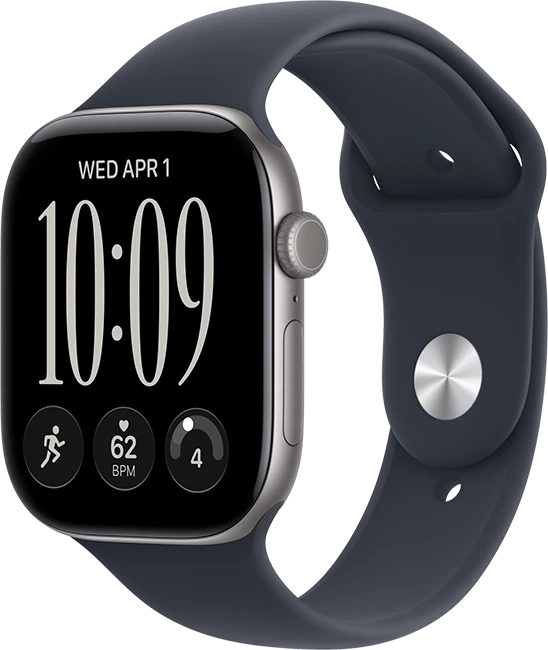
Apple Watch Series 12
The clearest starting point for an iPhone owner who wants everyday watch features alongside workouts and wellness insights.
- Battery claim
- Up to 24h normal use[1]
- The trade-off
- iPhone-only pairing; plan regular charging.
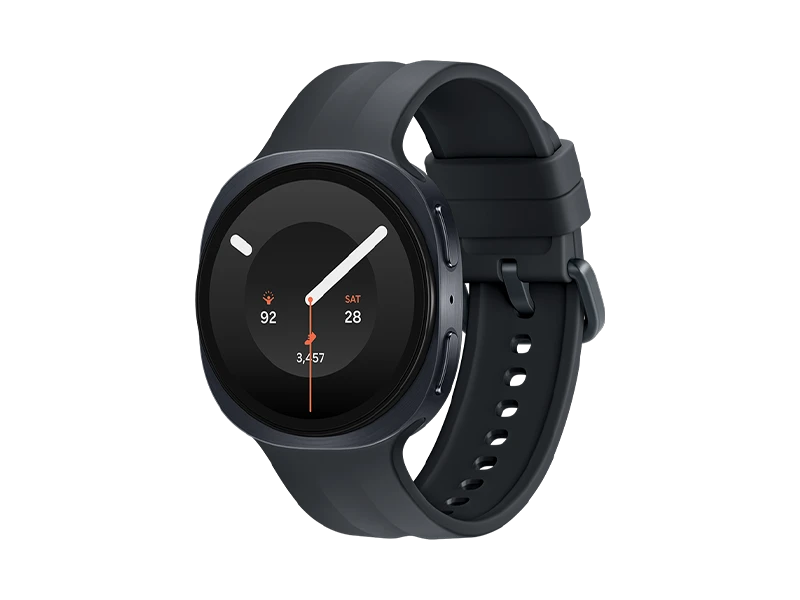
Samsung Galaxy Watch9
A strong fit for Galaxy owners who want a round Wear OS watch with Samsung’s phone-connected wellness and workout tools.
- Battery claim
- 40mm: up to 30h, AOD on[2]
- The trade-off
- Several health functions require a Galaxy phone.
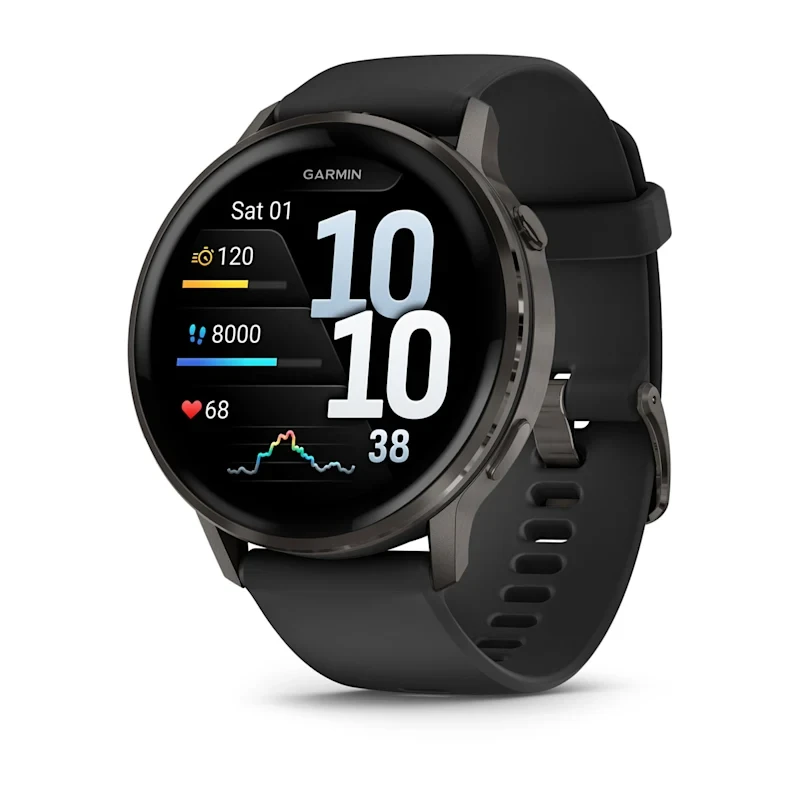
Garmin Venu 4
Consider it when training guidance and fewer charging interruptions matter more than a phone-ecosystem smartwatch experience.
- The trade-off
- A fitness-first, phone-tethered smart experience.
Photos illustrate the model, not a promise that the initially linked size, band or finish matches the image. Confirm your exact variant on Amazon. Other Android owners should weigh Samsung-only health restrictions before choosing Galaxy Watch9.
Compare the decision, not just the specs.
Compatibility and charging habits can rule out the wrong watch before you buy.
| What matters | Our iPhone pickWatch Series 12 | Our Samsung pickGalaxy Watch9 | Our fitness/battery pickVenu 4 |
|---|---|---|---|
| Best fit in this shortlist | Everyday watch features for supported iPhone owners. | Samsung ecosystem features for eligible Galaxy owners. | Fitness guidance and longer battery estimates across phone ecosystems. |
| Phone requirements | iPhone 11+ or SE 2nd generation+; iOS 27+.[1] | Android 13+, 1.5GB+ RAM and Google Mobile Services. No iOS, Huawei or tablets.[2][3] | Compatible iPhone or Android through Garmin Connect; check current app/OS requirements.[12] |
| Manufacturer battery estimate | Up to 24h normal use; up to 38h Low Power Mode.[1] | 40mm: up to 30h with AOD on. No separate 44mm or AOD-off runtime in the reviewed U.S. sources.[2] | Default display: 45mm up to 12 days; 41mm up to 10. Always-on: 45mm up to 4 days; 41mm up to 3.[4][5] |
| What’s behind that estimate? | Normal-use test includes a 60-minute workout and six hours of sleep tracking; cellular conditions differ by model.[1] | The cited 40mm estimate is AOD-on. Samsung does not publish a comparable detailed test protocol alongside it.[2] | Default scenario has no timed activities or music streaming. Always-on, GPS and flashlight usage change runtime.[5] |
| Case-size labels | 42mm / 46mm; ceramic dimensions differ.[1] | 40mm / 44mm.[2] | 41mm / 45mm.[10] |
| GPS | Precision L1 GPS.[1] | L1 + L5 dual-frequency GPS.[2] | Built-in GPS with multi-band support.[4][10] |
| Health functions to check | ECG, sleep and wellness tools have eligibility/region limits; some Series 12 features await clearance or rollout.[1][8][13] | Selected health tools require a Galaxy phone. U.S. blood-pressure monitoring is unavailable.[9] | Wellness tools are not medical diagnosis; ECG has region, software and age restrictions.[10] |
| Calls away from your phone | Optional cellular model needs a supported plan/network. Initially linked offer is GPS-only.[1] | LTE is a separate version with a qualifying plan and carrier limitations. Initially linked offer is Bluetooth.[3] | Calls use a compatible paired smartphone.[10][12] |
| Charging | About 30 minutes to 80% in Apple’s stated test; equipment and conditions matter.[1] | 40mm: 50% in 30 minutes / full in 80. 44mm: 45% in 30 minutes / full in 90.[2] | Supplied proprietary cable; no charge-time estimate in the cited manual page.[11] |
| Check your exact offer | Check price on AmazonPaid link · Choose your size, finish, band and condition. | Check price on AmazonPaid link · Choose your size, finish, band and condition. | Check price on AmazonPaid link · Choose your size, finish, band and condition. |
Three watches. Three reasons to choose.
Read the fit—and the reason you might choose something else.
Not a hands-on test
Apple Watch Series 12
Our iPhone-first pick—not a watch for everyone. Series 12 makes the most sense when you want an Apple companion on your wrist and are comfortable making charging part of your day.
You use a supported iPhone and want Apple-native apps, workout tracking, wellness tools and an optional cellular model.
You use Android, want to go many days between charges, or mainly need basic activity tracking at a lower cost.
The reason to choose it
The appeal is the whole package, not one sensor. Apple combines watch apps, notifications, workout tools and safety functions with Readiness, Vitals, sleep tracking and training load. That makes Series 12 a logical general-purpose shortlist choice for iPhone users. Pairing requires iPhone 11 or later, including iPhone SE 2nd generation or later, on iOS 27 or later—check your phone before buying.[1]
The compromise you’ll actually notice
Apple rates it for up to 24 hours of normal use, not several days of unrestricted use. Its test includes a one-hour workout and six hours of sleep tracking; cellular and other usage can change results. Apple’s fast-charge claim is about 30 minutes from empty to 80%, under its stated equipment and test conditions. If charging interruptions are your main frustration, Garmin’s different battery proposition deserves a look.[1]
What not to assume
A health feature listed on the box is not a diagnosis or a promise it works for every buyer. Apple has age, region and other eligibility rules; its availability page also warns that Series 12 hypertension notifications may await regulatory clearance. Some advertised AI and Health functions are marked for late-2026 rollout. Buy for the functions confirmed available to you, not a future feature. The initially linked GPS model does not include cellular service.[1][8][13]
What earns its place
- Apple-native everyday watch experience
- Workouts, training load and wellness tools
- Documented fast charging and optional cellular model
What to weigh
- Cannot pair with Android
- Up-to-24-hour normal-use estimate means regular charging
- Health and AI functions have availability limits
The initial Amazon link is 46mm GPS, Black Aluminum with Black Sport Band M/L. Check wrist fit; choose a cellular variant separately if you need it.
Not a hands-on test
Samsung Galaxy Watch9
The Samsung-first choice in this comparison. Watch9 is most persuasive when you already own an eligible Galaxy phone—not when you assume every Android owner gets an identical experience.
You have an eligible Galaxy phone, want Wear OS apps and Samsung Health integration, and accept regular charging.
You use iPhone, expect every health function on a non-Samsung phone, or need unrestricted U.S. blood-pressure monitoring.
Where it makes sense
Galaxy Watch9 combines a round always-on AMOLED display, Wear OS 7, Samsung Health tools and L1 + L5 GPS. It comes in 40mm and 44mm sizes, with Bluetooth or LTE versions. Setup requires Android 13 or later, at least 1.5GB RAM and Google Mobile Services. Samsung explicitly excludes iOS, tablets and Huawei phones. For an eligible Galaxy owner, those ecosystem requirements are much less of a compromise.[2][3]
Read the battery figure carefully
Samsung publishes up to 30 hours with always-on display enabled alongside the 40mm battery specification. The reviewed U.S. documents do not supply an AOD-off runtime or a separate 44mm runtime, so we do not invent either. Samsung lists 40mm charging at 50% in 30 minutes and full in 80 minutes. These are not matched tests against Apple or Garmin, and they should not be treated as our measured endurance results.[2]
The important health restriction
Selected functions, including Samsung Health Monitor ECG, need an eligible Samsung phone, with additional age and region restrictions. Other Android pairing is not a guarantee of access to the full health stack. Samsung’s U.S. support says blood-pressure monitoring is unavailable in the United States. Wellness scores and sleep-related risk notifications should inform a conversation with a clinician—not replace medical assessment.[2][9]
What earns its place
- Wear OS apps and Samsung ecosystem integration
- Two case sizes and dual-frequency GPS
- Workout and sleep tools with documented requirements
What to weigh
- No iPhone support
- Samsung-only health restrictions matter
- Published battery estimates have incomplete variant coverage
The initial Amazon link is 40mm Bluetooth in Cream, US version; the photo shows Graphite. Select the finish you want. LTE is a different version and may require carrier charges.
Not a hands-on test
Garmin Venu 4
Our fitness-and-battery alternative. Venu 4 is a good shortlist fit if you’ll use Garmin’s training and recovery guidance—and would rather compromise on phone-style features than build your routine around frequent charging.
You want Garmin training tools, multi-band GPS and longer battery estimates, with compatible iPhone or Android pairing.
You primarily want platform-native apps, an independent cellular watch, or the 12-day estimate while using always-on display and frequent GPS workouts.
The reason to shortlist it
Venu 4 brings Garmin Fitness Coach, training readiness, recovery guidance, Body Battery, sleep tools and multi-band GPS into a conventional round watch. Both sizes have a speaker, microphone and built-in LED flashlight. The cases are 41mm and 45mm—not 42mm and 45mm. This is a 2025-launched model selected for a 2026 buying decision, not a claim that every pick was released this year.[4][10]
The battery advantage has conditions
Garmin rates the 45mm for up to 12 days and the 41mm for up to 10 days in its default smartwatch scenario. That scenario excludes timed activities and music streaming. Its separate always-on estimates fall to four days and three days respectively. The 45mm multi-band activity estimate is up to 17 hours without music. Flashlight use is not included in the estimates and has a significant battery impact.[4][5]
What you trade for that approach
Calls use a compatible paired phone, so this is not the same proposition as an independently connected cellular watch. Garmin supports iPhone and Android, with phone-specific feature differences; check the current Garmin Connect requirements. Charging uses the supplied proprietary cable, and we found no official charge-time promise in the cited manual page. If you prize phone-style apps over training guidance, the platform-native choices are more natural starting points.[10][11][12]
What earns its place
- Multi-day battery estimates with mode-specific documentation
- Training/recovery tools and multi-band GPS
- Compatible iPhone/Android pairing and LED flashlight
What to weigh
- Calls and connected features depend on a phone
- Always-on display and activities shorten runtime
- Proprietary charging cable; no cited charge-time estimate
The initial Amazon link is Venu 4 45mm with Black Silicone. Choose 41mm if it fits better, but use its shorter battery estimates when deciding.
Check these before checkout.
The phone you already own
Apple Watch requires a supported iPhone. Galaxy Watch9 is Android-only, and selected health features need an eligible Galaxy phone. Garmin spans iPhone and Android, but individual phone features still differ.
Your real charging routine
Overnight tracking is useful only if you can wear the watch overnight. Decide when you’ll charge it, and compare the mode you’ll actually use—not the longest advertised estimate.
The exact size and ownership cost
Check case size, band fit, seller, condition, returns and included charging equipment. Optional LTE/cellular service may add carrier charges; optional app services can add separate costs.
Health features have country, age, phone and regulatory restrictions. Wellness insights do not replace a clinician or professional diagnosis.
A few things worth clearing up.
Which smartwatch should an iPhone owner start with?
In this three-watch comparison, Apple Watch Series 12 is the everyday iPhone-first option. Garmin Venu 4 is the alternative if fitness guidance and longer battery estimates matter more. Check Apple’s exact iPhone/iOS requirement and Garmin Connect compatibility before buying; Galaxy Watch9 does not support iPhone.[1][3][12]
Can I use Galaxy Watch9 with a non-Samsung Android phone?
Eligible Android pairing is possible, but it does not unlock every Samsung health function. Setup needs Android 13+, 1.5GB RAM and Google Mobile Services, with Huawei and tablets excluded. Samsung Health Monitor and selected health tools require an eligible Galaxy phone. For other Android brands, compare the functions you’ll actually receive rather than choosing from the headline list.[2][3][9]
Does Garmin really last 12 days between charges?
Twelve days is Garmin’s up-to estimate for the 45mm default-display smartwatch scenario—not a promise for every routine. The assumptions exclude timed activities and music streaming. Its 45mm always-on estimate is four days; GPS workouts and flashlight use reduce runtime further. Choose the mode and case size you’ll use, then leave room for real-world variation.[4][5]
Are these watches medically diagnostic?
No general wellness score or sensor list should be treated as a diagnosis. Individual functions can have age, phone, software, country and regulatory restrictions. If a health feature is the reason you’re buying, verify the manufacturer’s eligibility and availability information first. Discuss medical concerns with a qualified clinician.[1][8][9][10]
Do I need a cellular plan or a subscription?
The initially linked Apple GPS and Samsung Bluetooth offers are not standalone cellular variants. If you choose a cellular/LTE version, check compatible carriers, coverage and ongoing plan charges. Garmin’s calls depend on a paired phone. Optional fitness/app subscriptions can add separate costs; decide whether their extras are useful before budgeting for them.[1][3][10]
Where are the current prices, discounts and delivery options?
Use the labelled Amazon links to inspect the current offer. We do not display cached Amazon prices, stock or review stars here. Confirm model, case size, finish, band, seller, condition and delivery for your address. The links are affiliate links: as an Amazon Associate we earn from qualifying purchases.
Do I need to upgrade just because it’s 2026?
No. If your current watch still fits your phone, charging routine and goals, a newer year label is not a reason to replace it. Choose an upgrade only when it solves a specific problem or gives you a function you’ll use. These are three editorial use-case picks, not a claim that every other smartwatch is worse.
Different priorities. Not a made-up podium.
We selected one iPhone-first option, one Samsung-first option and one fitness/battery-focused alternative. Current independent buying guides provide context; manufacturer documents support the specifications. This is not an exhaustive survey, a sales ranking or our own lab test. A different watch may suit your budget or phone better.[6][7]
Battery figures use different manufacturer test conditions, not a matched endurance test. We do not publish invented scores or cached retailer prices. Check the cited requirements and your exact offer before purchasing.
Sources & specification notes.
Information checked October 20, 2026. Manufacturer estimates and feature availability can change. Sources linked below do not imply that their publishers endorse this site.
- [1]Apple Watch Series 12 — technical specificationsPrimary source · compatibility, battery tests, charging and features
- [2]Samsung Galaxy Watch9 — U.S. launch specificationsPrimary source · sizes, GPS, battery and charge figures
- [3]Samsung — connecting Watch9 to your phonePrimary source · setup, phone exclusions and LTE requirements
- [4]Garmin Venu 4 — battery informationPrimary source · size- and mode-specific battery estimates
- [5]Garmin Venu 4 — battery-life assumptionsPrimary source · default display, always-on and flashlight conditions
- [6]WIRED — smartwatch buying guide, September 2026Independent context · iPhone and Samsung use-case recommendations
- [7]CNET — best smartwatches for 2026, August editionIndependent context · Venu 4 fitness-first positioning; predates Series 12 launch
- [8]Apple — watchOS feature availabilityPrimary source · regional and regulatory availability
- [9]Samsung — Health Monitor requirements and limitsPrimary source · ECG eligibility and U.S. blood-pressure restriction
- [10]Garmin — Venu 4 launch and feature detailsPrimary source · September 2025 launch, training, phone and health functions
- [11]Garmin Venu 4 — charging the watchPrimary source · charging connection and equipment
- [12]Garmin — smartphone compatibility guidePrimary source · iPhone/Android pairing and phone-feature differences
- [13]Apple Watch Series 12 — feature rollout notesPrimary source · late-2026 functions and availability conditions
Choose your fit. Check the details.
Start with compatibility. Make peace with the charging routine. Then confirm the exact offer.
Paid links · As an Amazon Associate I earn from qualifying purchases.